The Dangers of AI Dependency: Reclaim Your Cognitive Independence
When was the last time you memorized a phone number? Not your spouse's, a friend's number, a colleague's extension, the digits to call when your car breaks down? If you're like most people, you can't remember. Your phone remembers for you. And this convenience is quietly reshaping your brain in ways neuroscientists are only beginning to understand.
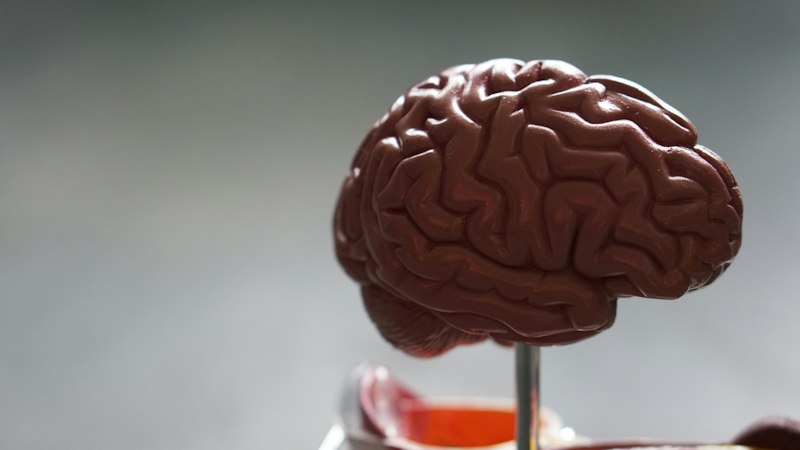
What's Really Happening to Your Brain
The danger is not that AI will become sentient and overthrow humanity. The danger is far more insidious: we are becoming cognitively dependent on tools we do not understand, for tasks we once performed ourselves.
The Memory Paradox
People who rely heavily on GPS show reduced hippocampus activity, the brain region for spatial memory. Literally shrinking from disuse.
Attention Fragmentation
AI-powered notifications train our brains for perpetual distraction. Deep work, the state where insight occurs, becomes increasingly rare.
Critical Thinking Erosion
When AI writes your drafts and suggests your conclusions, you bypass the struggle where learning actually happens.
Skill Atrophy Cycle
First AI assists, then it suggests, then it generates. At each stage, your capability degrades imperceptibly until you become an editor, not a creator.
AI Replaces Tasks, Not People, Yet
Here's the crucial insight: AI does not replace humans. AI replaces human tasks. And which tasks does it replace first? The routine, the algorithmic, the repeatable, precisely the tasks that once built foundational skills.
A junior lawyer once learned their craft by reviewing thousands of contracts, spotting patterns, developing an intuitive sense for risk. Now AI reviews those contracts in seconds. The lawyer is freed from drudgery, but also from the apprenticeship that made seniors senior.
The Counter-AI Movement focuses not on rejecting AI, but on maintaining human capability alongside AI utility. The goal is cognitive independence.
This is why we focus on cognitive independence, remaining a thinking, capable human even while using thinking machines. Use AI as a tool for amplification, not a crutch for atrophy.

The Cognitive Independence Model
Future-proofing your brain requires three interlocking practices that ensure you use AI as a tool for amplification, not a crutch for atrophy:
The Capability Audit identifies dependencies. The Cognitive Calisthenics Program strengthens atrophied skills through deliberate "hard way" practice. The Augmented Mastery Approach ensures you engage critically with AI rather than accepting output passively. Together, you remain the pilot of your mind.
Five Cognitive Exercises to Reclaim Your Brain
Here are five specific exercises targeting mental capabilities that AI threatens to erode. Practice them consistently, and you will notice the difference within weeks:
1The Memory Palace Protocol
Memory is the foundation of learning, reasoning, and creativity. When memory weakens, every cognitive task becomes harder. AI can store information, but only you can integrate it into your understanding. Create a mental "memory palace", a familiar place where you store vivid, memorable images representing information you want to retain.
2The Handwriting Revival
Handwriting engages the brain differently than typing. Studies show students who take notes by hand retain more conceptual understanding. The slower speed forces selection and synthesis, active thinking rather than passive transcription. Voice-to-text and AI transcription have made handwriting rare, but the connected thinking it promotes is invaluable.
3The Mental Mathematics Challenge
Numerical reasoning is fundamental to decision-making. When you calculate mentally, you develop intuitive number sense that informs judgment even when not actively calculating. Most adults now struggle with calculations elementary students once performed routinely. The intuitive number sense mental math builds atrophies from disuse.
4The Focus Fortress Practice
Deep focus is where complex learning, creative insight, and meaningful work occur. AI-powered systems capture and fragment attention. The average attention span has dropped from 12 seconds to under 8 seconds, shorter than a goldfish. By training focus deliberately, you maintain a capability that becomes scarcer every year.
5The AI Critique Protocol
Using AI well requires engaging critically, not passively. When you accept AI output without scrutiny, you cede judgment to an algorithm. When you critique and refine, you extend your thinking through a powerful tool. The protocol transforms AI from a replacement for thinking into a tool for thinking.

The Cognitive Divide: Which Path Will You Choose?
The coming decade will see a divergence in human cognitive capability unlike any in history.
On one path are those who surrender progressively more mental function to AI. Their productivity will rise initially, but their independent capabilities will degrade. They will become dependent on systems they do not understand.
On the other path are those who maintain cognitive independence while using AI strategically. They will have AI's speed and scale, combined with human depth and judgment. When AI fails, they will still be able to think.
The Dependent Path
Outsourced memory, fragmented attention, eroded critical thinking, skill atrophy, vulnerability to AI failures
The Independent Path
Trained memory, deep focus capability, sharp critical thinking, maintained skills, resilience and adaptability
Your First Seven Days of Cognitive Independence
Theory without action is useless. Here is a concrete plan for your first week:
- Each action builds on the previous day, consistency matters more than intensity
- The weekend reflection is crucial, without it, learning rarely sticks
- Sharing insights with others reinforces your understanding and builds accountability
The Choice Before You
You are reading this because something in you recognizes the danger. Perhaps you have noticed your own memory weakening. Perhaps you have felt the frustration of trying to focus while devices pull at your attention. Perhaps you have caught yourself accepting AI output without scrutiny.
This recognition is the first step. It is also the easiest. The harder step is consistent action, day after day, choosing cognitive effort over cognitive convenience, maintaining capabilities that AI could provide more easily.
Your cognitive capabilities are not just tools for work, they are the substance of your mind, the foundation of your independence, the source of your unique contribution to the world. When you outsource thinking, you outsource a piece of what makes you human.
Your brain is yours. Keep it that way.
Bonus Tool: Anki, A free, open source flashcard app using spaced repetition to optimize memory retention. It helps you remember more efficiently, but you still do the remembering.
Ready to Reclaim Your Cognitive Independence?
Start Your brain upgrade Journey, with "The AI Resistant Income system, to secure your cashflow against AI takeover, and cooperate layoffs due to AI automation.